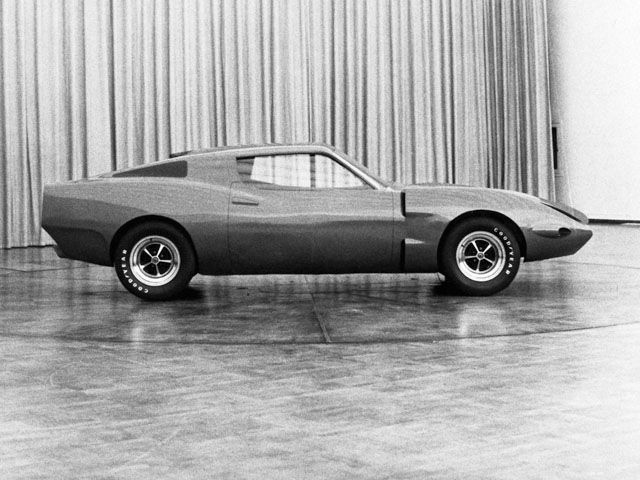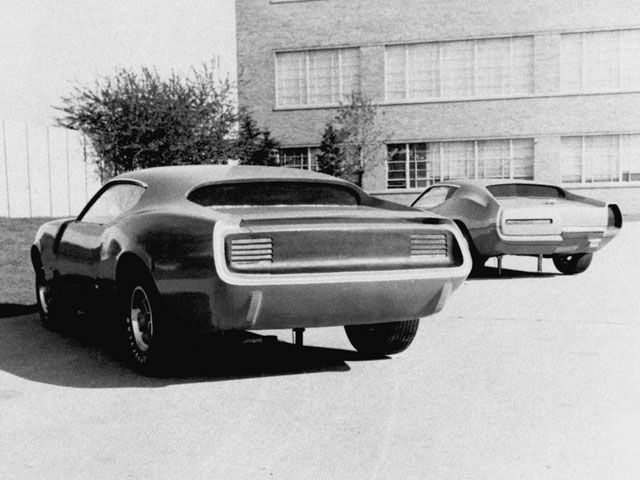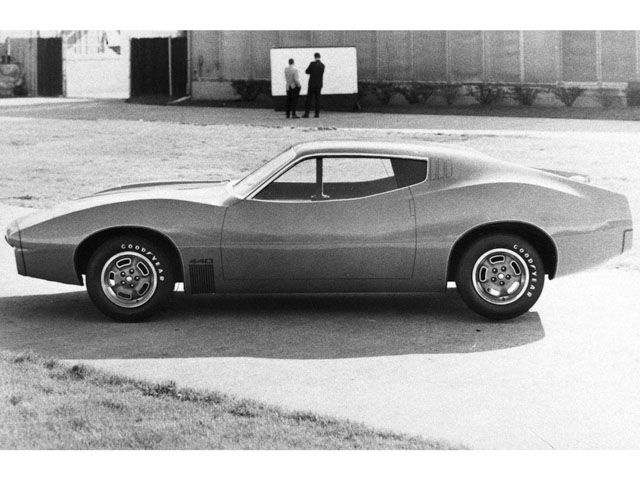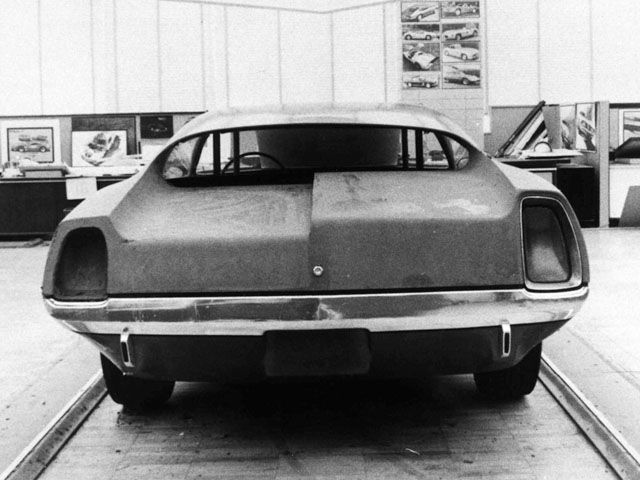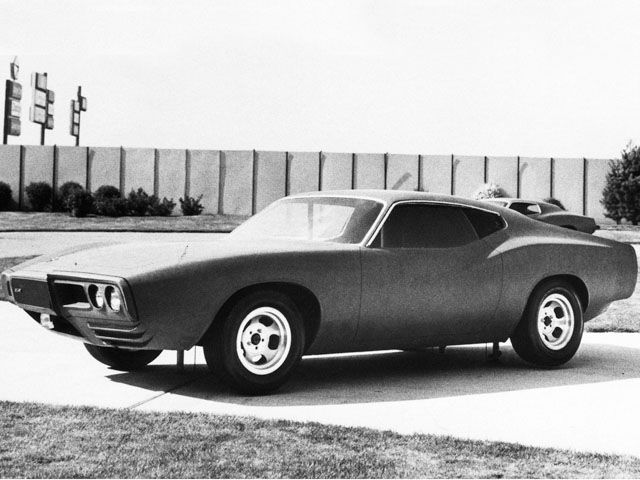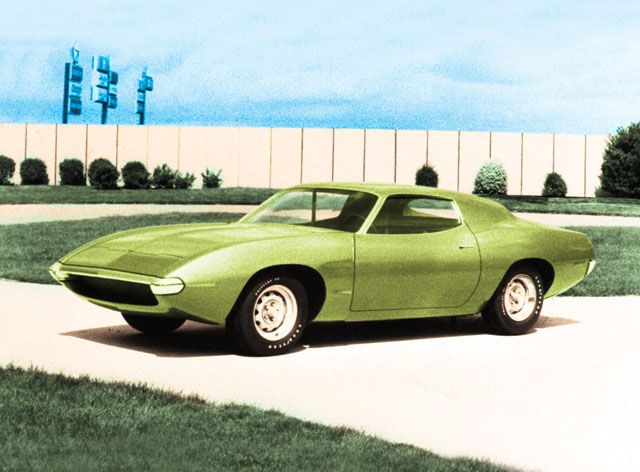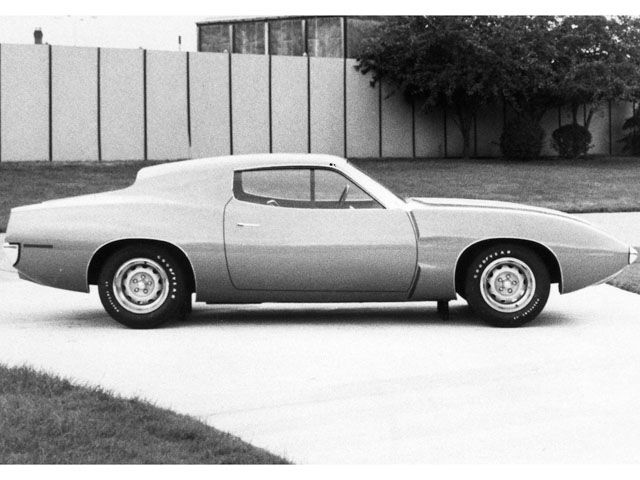
The world was given a chance to get one more generation of Barracuda back in 1975, but due to 3 main factors it didn’t reach production line: high insurance charges, government’s criticism against muscle cars and industry’s turn from performance to research [emission].
There were several proposals made for the new generation fish design in E-body style, but Chrysler wasn’t interested because there was no place for high performance cars in their plans. There was some work being done at Plymouth Advanced Studio – they were working on the next Barracuda. Chrysler had 4 years for new model preparation and no one working on this project expected that the E-body Barracuda will not see the sunlight. It is interesting, that there were 2 designs involved in the next Barracuda’s creation. One was made by designers Shunsuke Matsurra [aka, Matty] and Don Hood, while the other was built by the team of John Sampson and John Herlitz. These teams studied each other’s projects, discussed, but worked separately. Herlitz and Sampson made their Cuda look fluid while Matsurra made it more muscular. After claying 4 different models teams ended up with 2 units. And the final proposal was actually the blend of both team designs.
The other problem was that Chrysler’s management was made of financial executives and they no longer listened for car enthusiasts. Chrysler also get some critics for being short-minded during 1968 when they had good sales but did not invest money in development. Some say, it was a mistake to make Barracuda smaller than Challenger, because it ment new body panels to be fabricated. Leaving the same panels would have saved millions that could have been invested in future development.
Related posts:
Custom G Force 1971 Plymouth Cuda It took Johnson's Rod Shop 3 years to built this custom 1971 Plymouth G Force 'Cuda. The idea was to create an ultimate street legal car that would handle 200 mph. Even though some styling cues are f...
Rafael Reston’s 2008 Plymouth Cuda concept This Cuda is inspired by original 1971 Plymouth Barracuda design with quite a lot of familiar features to recent desing and concepts of Camaro, Mustang, Road Runner. Theoretically, this Cuda could be ...
Plymouth Barracuda: 1964-1974 Barracuda was manufactured by Plymouth [Chrysler's division] 1964-1974 period. The first Barracuda generation [1964-1966] was based on Plymouth Valiant and had a fastback body [A-platform] with a dist...
Leonhard’s Plymouth Road Runner concept Inspired by 1970's famous Plytmouth Road Runner austrian designer Micheal Leonhard gave the word nice futuristic interpretation of the new Runner that could theoretically be equipped with 5.7 liter en...
Reborn: Sox and Martin Collector Series Hemi Cuda Mr. Norm's Garage has news again - they teamed up with Ronnie Sox's wife and Buddy Martin himself to build a small run of the new Sox & Martin Collector Series Hemi Cuda cars based on the new Dodg...
Cobra Venom V8 This futuristic muscle car concept was designed by Jamie Martin who was inspired by the iconic Anglo-American muscle car - AC Cobra. Jamie's concept is named Cobra Venom V8 and it uses the latest tech...
1970 Foose Terracuda What would You get if You add 1970 Plymouth Barracuda and Chip Foose? Right, Plymouth Terracuda. A rich guy named Darren Metropoulos ordered this creation from Foose and asked him to make this 1970 Te...
Teague 2010 AMC concepts Although AMX Javelin competed respectively in pony car playground, probably, the coolest AMC's car was AMC AMX. It was based on the Javelin's platform which was made shorter just to fit 2 seats and bi...
Lingenfelter T/A VS Phoenix T/A Lingenfelter
This one is the 2010 Lingenfelter TA concept based on 2010 Chevrolet Camaro SS and powered by 455 cubic 655 HP LS engine [7.5 liter aluminum block]. While the original 1971 Trans Am shar...
2011 Pontiac Firebird Trans Am concept Even though GM stopped producing Pontiac, there still are a lot of Pontiac fans that even have some ideas to share for the 2011 Pontiac Firebird Trans Am. We all know, that Firebird was based on Chevr...